
Australian Consul General Visits NIT Durgapur; India–Australia Research Collaboration and Green Steel Cooperation Take Centre Stage
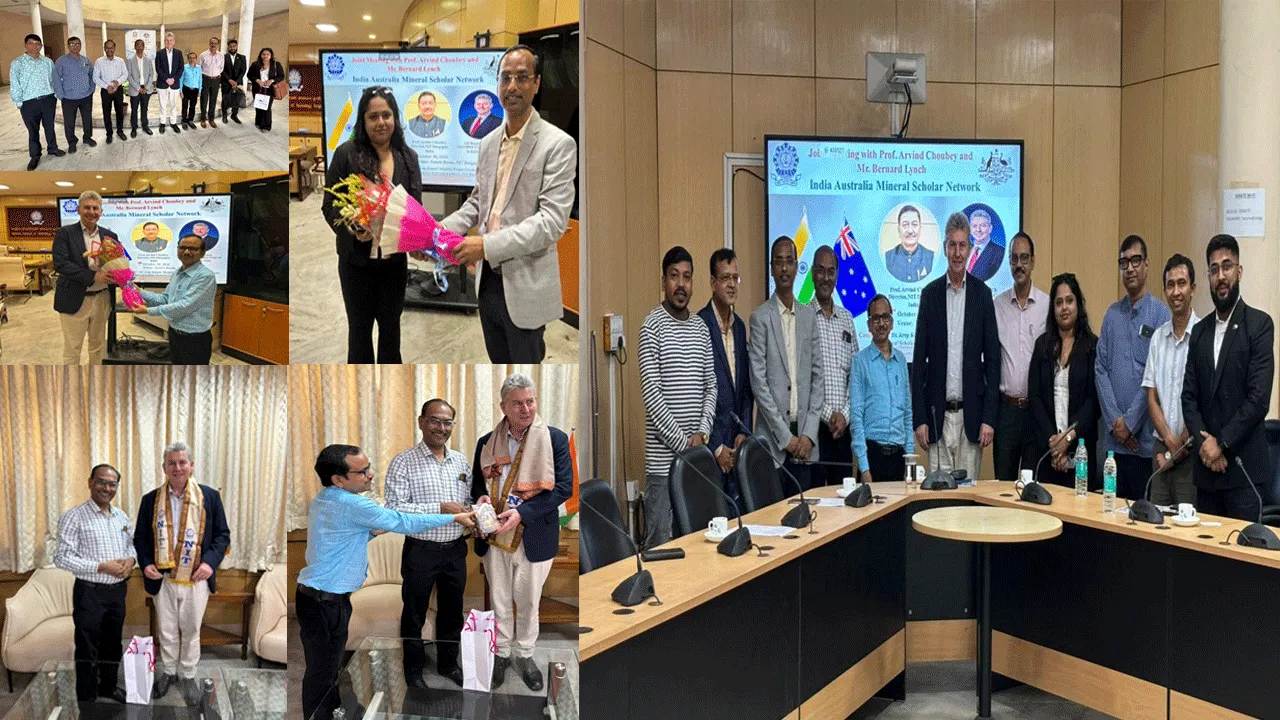
The National Institute of Technology Durgapur (NIT Durgapur) hosted Mr Bernard Lynch, Consul General of Australia in Kolkata, Ms Anagha, Senior Economic Advisor, Australian Consulate and Mr Soham Chakraborty, Business Development Manager, Austrade, for an interactive meeting focused on strengthening India–Australia cooperation in higher education, scientific research, technological innovation and sustainable industrial development.
The meeting was inaugurated under the instruction of Prof. Arvind Choubey, Director of NIT Durgapur. Prof. Pathik Kumbhakar (Director-in-Charge and Dean Research & Consultancy), Registrar, All Dean, all HoD of CoE, Dr. Arup Kumar Mandal (Associate Professor in the Department of Metallurgical and Materials Engineering and Project Leader of IAMSN at NIT Durgapur) Mr. Avash Kumar Saha (PhD scholar), Mr. Tusar Kanti Paul (PhD Scholar) and Dr. Prasenjit Singha (Postdoctoral Fellow) of NIT Durgapur, Prof. Pathik who welcomed the Australian delegation and highlighted the importance of international academic partnerships in advancing research excellence, innovation and institutional development. In his address, he emphasised the value of building meaningful and long-term collaborations between Indian and Australian institutions, particularly in areas where joint research, the exchange of expertise and shared technological capabilities can contribute to addressing global challenges. He also highlighted the importance of translating collaborative research into practical solutions for industry and society, with particular relevance to sustainable technologies and the transition towards a low-carbon future. The discussions provided an opportunity to review ongoing India–Australia academic engagement, assess the progress of collaborative initiatives and explore new avenues for institutional cooperation.
During the interaction, Dr. Arup, highlighted the importance of strengthening research partnerships that address challenging industrial problems. He expressed his readiness to engage more deeply with complex industrial challenges and emphasised the significant potential for collaboration in green steel, low-carbon metallurgical processes and sustainable metal extraction technologies. The discussion highlighted the growing importance of decarbonising the iron and steel industry, which requires innovative approaches, advanced research, technology development and close cooperation between academia and industry. India–Australia collaboration in this area could help bring together complementary expertise, encourage knowledge exchange and support the development of more sustainable metallurgical processes.
A key highlight of the meeting was the presentation and discussion on the progress of the India–Australia Mineral Scholar Network (IAMSN) programme. The interaction provided Mr Bernard with an overview of the programme's progress, its contribution to international research mobility and the professional development of Indian researchers through research engagement in Australia. The experiences of two researchers associated with the programme, Mr Avash Kumar Saha, the first Visiting Scholar from India to CSIRO Australia under the programme, and Dr. Prasenjit Singha, a postdoctoral fellow associated with the NIT Durgapur & CSIRO Australia collaboration were shared during the meeting. Their accounts illustrated how international research exposure can strengthen technical capabilities, expand professional networks and create opportunities for future collaborative research. Mr. Avash spoke about his research experience in Australia, describing how his engagement extended beyond his host laboratory to interactions with universities, researchers and academic institutions across the country. He highlighted the professional relationships and research connections he developed across Australia, which have broadened his international outlook and opened avenues for future academic and research engagement. He also referred to the recognition he received from the Australian Prime Minister in connection with his research, which was recognised in the context of Australia's Trade and Investment Roadmap 2025. Following the completion of his research work in Australia, Mr. Avash has recently submitted his Ph.D. thesis and is now looking forward to further opportunities to contribute to research, innovation and international collaboration.
Dr. Prasenjit shared his experience of approximately six months of research engagement in Australia, highlighting the practical, hands-on exposure he gained in Australian laboratories. He explained how working in an international research environment helped him develop technical expertise, understand advanced laboratory practices and establish professional connections with researchers and institutions at different Australian universities. His experience underlined the importance of international research mobility in preparing early-career researchers to undertake advanced scientific and technological challenges.
The interaction with alumni of CSIRO Australia also reinforced the role of collaborative research networks such as IAMSN in connecting researchers, strengthening institutional relationships and creating a foundation for future joint initiatives.
Mr. Bernard expressed interest in learning more about the progress and outcomes of the IAMSN programme, as well as the experiences and research contributions of the participating scholars. The interaction offered the Australian delegation an opportunity to understand the programme's impact on research capacity building, international networking and the development of long-term academic relationships. The Consul General expressed support for exploring further opportunities for India–Australia engagement and indicated that the matters discussed would be taken forward through the Australian Department of Foreign Affairs and Trade (DFAT), Government of Australia, for consideration. The discussions also covered the broader scope for collaboration in education, research, innovation and sustainable industrial development. The meeting reflected a shared interest in translating the experience gained through existing research partnerships into new opportunities for meaningful institutional engagement.
The discussions concluded with a common emphasis on the importance of international cooperation in addressing climate change and supporting the transition towards net-zero emissions. Both the NIT Durgapur representatives and the Australian delegation recognised the potential for collaborative research, academic exchanges and knowledge sharing to contribute to sustainable industrial transformation. The engagement established a constructive platform for identifying impactful ideas and exploring potential collaborative initiatives in the coming years. Particular importance was attached to strengthening connections among researchers, universities and industry stakeholders, with green steel and low-carbon technologies emerging as promising areas for future engagement. The visit marks a significant opportunity to build upon the foundation established through the IAMSN program and to further strengthen India–Australia cooperation in research, education, and sustainable technological development.





Recent News

Most Viewed
Lifestyle
Lifestyle
Culture
- October 15, 2026
"Judge Pandit House Durga Puja" A Legacy of Faith and Mystery
Lifestyle

Culture