
Bhaduri Mahashaya: The Silent Luminary of Indian Yogic Tradition
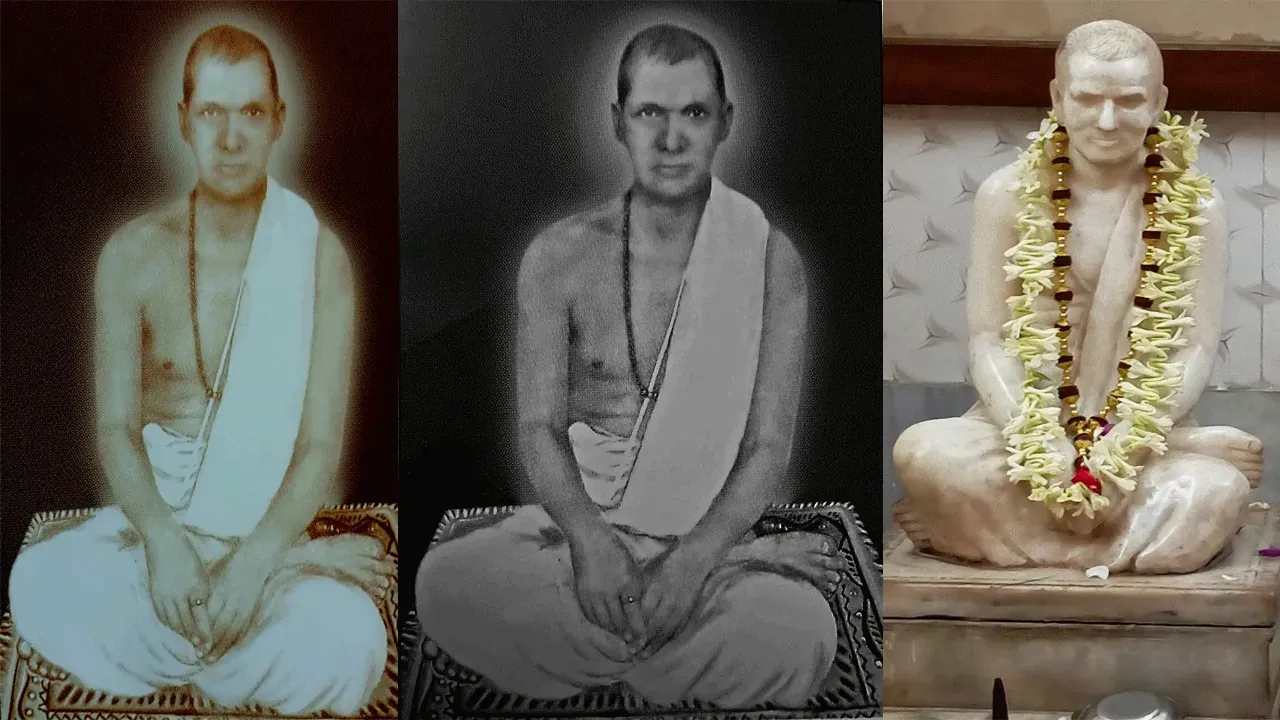
In the vast firmament of Indian spirituality, there are certain luminaries whose brilliance shines not through public acclaim but through the profound depths of their inner realization. Though their lives and teachings may not be widely known to the general public, they remain an inexhaustible source of inspiration for seekers on the spiritual path. Paramahamsa Maharshi Nagendranath Bhaduri, reverentially known as Bhaduri Mahashaya and celebrated as "The Levitating Saint," was one such extraordinary figure. His life, marked by the harmonious integration of yoga, devotion, and self-realization, stands as a precious legacy of India's spiritual heritage.
Bhaduri Mahashaya was born on December 6, 1846, into a prosperous zamindar family in the village of Payratungi in the Howrah district of Bengal. From an early age, he displayed exceptional intelligence and a deep thirst for knowledge. While studying at Duff College, he earned a Senior Scholarship, a distinction that reflected his academic excellence. Yet his vision extended far beyond personal achievement. Committed to the advancement of education, he established a free school in his native village. He later served with distinction as the headmaster of Janai English School and Bali English High School, making significant contributions to education and social development.
Although he was a successful educator, his true calling lay in spiritual pursuits. During the early phase of his life, he embraced the Brahmo faith and played an active role in its propagation. In later years, however, he dedicated himself to the promotion of Sanatana Dharma and immersed himself in yogic discipline. Through years of rigorous austerity and spiritual practice in Munger, he attained an elevated state of realization and remarkable yogic attainments. Upon settling in his place of residence, it gradually became a gathering place for spiritual aspirants and seekers of higher truth.
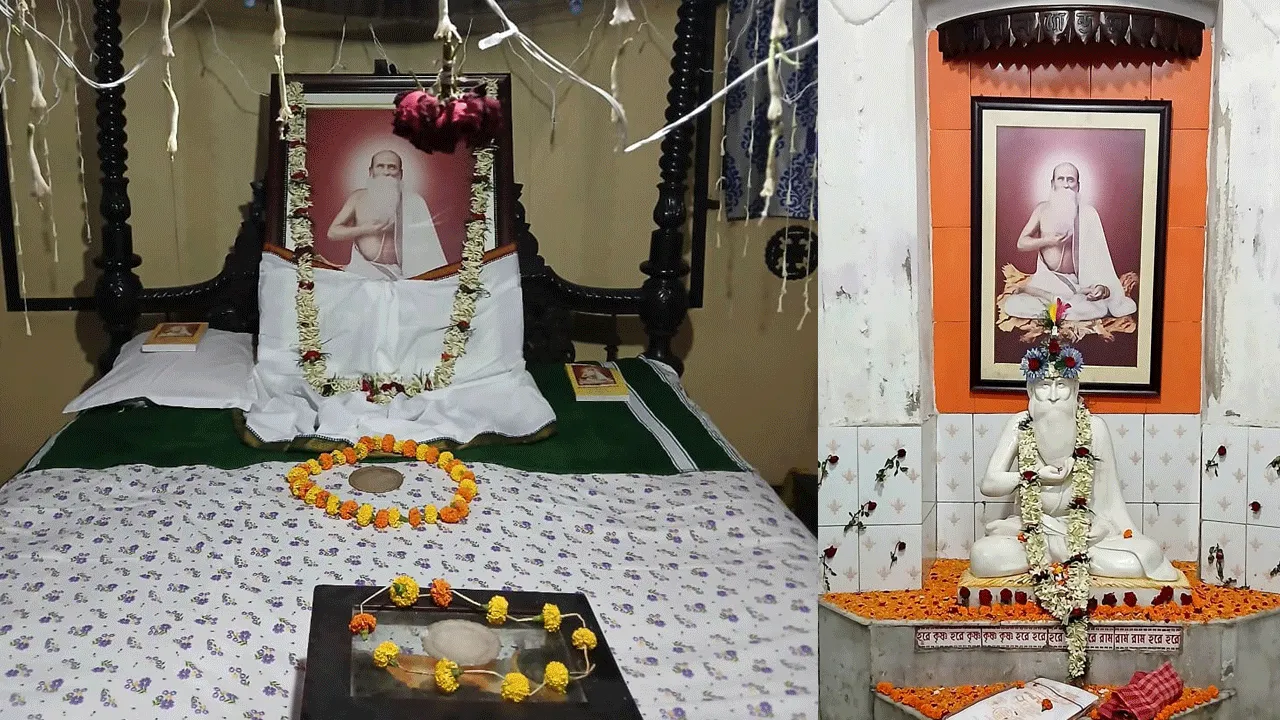
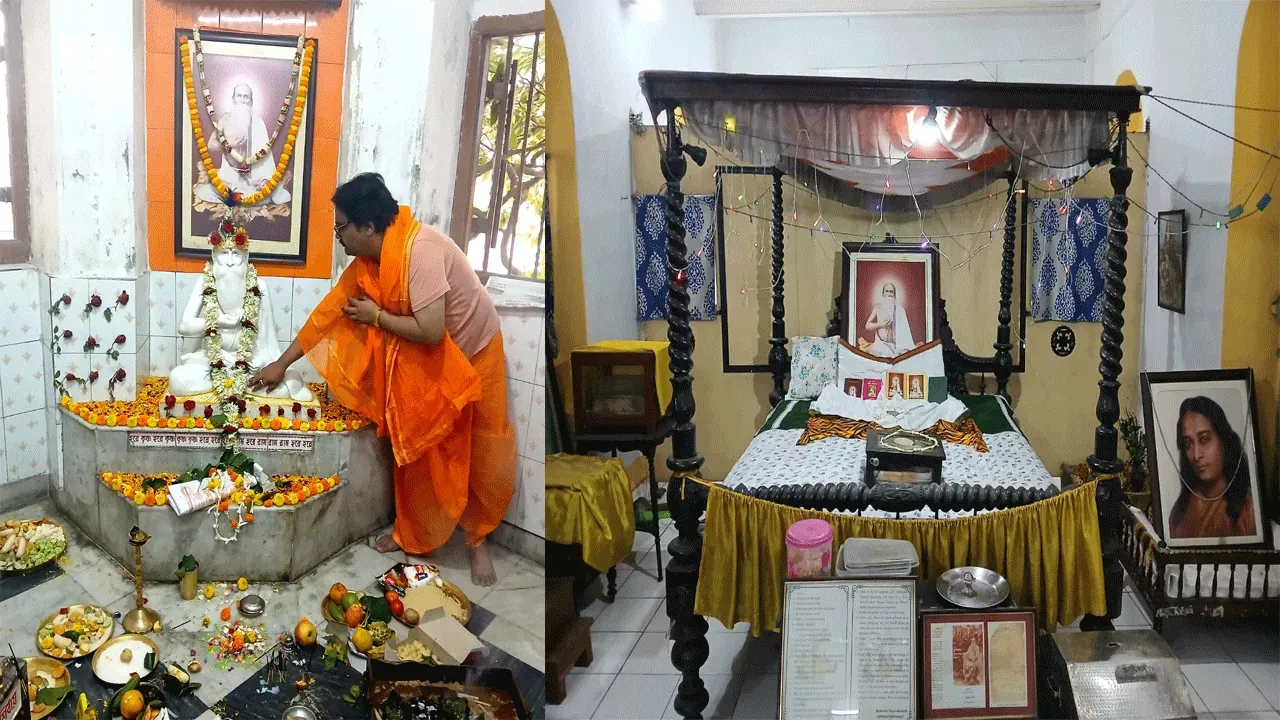
In the final years of his life, Nagendra Math, located on Rammohan Roy Road in Calcutta, emerged as the principal center of his spiritual activities. To this day, it stands as a living memorial to his legacy and to that of his spiritual son, Dhyanaprakash Brahmachari.
One of the most memorable episodes in Bhaduri Mahashaya's life was his meeting with Sri Ramakrishna Paramahamsa at Dakshineswar in 1881. This encounter is regarded as a significant moment in the history of Indian spirituality, bringing together two great spiritual personalities. It is said that Sri Ramakrishna was deeply moved upon listening to several devotional songs composed and set to music by Bhaduri Mahashaya, which are collectively known as "Paramartha Sangeet." According to tradition, both saints entered a state of divine ecstasy during their meeting. Many believe that Sri Ramakrishna's influence further deepened Bhaduri Mahashaya's devotion and strengthened the path of loving surrender to God that became so evident in his life and teachings.
In 1891, with the aim of spreading spiritual awareness and promoting the essential ideals of Sanatana Dharma, he founded the Sanatana Dharma Pracharini Sabha. For him, religion was never a matter of narrow identity; rather, it was a path toward self-transformation and the welfare of humanity. Rising above barriers of caste, creed, and social division, he opened the universal path of yoga and devotion to all. Following his Mahasamadhi, this spiritual mission was carried forward by his spiritual son, Dhyanaprakash Brahmachari. It is believed that at the time of his Mahasamadhi on November 2, 1926, Bhaduri Mahashaya transmitted all the spiritual powers attained through his lifelong sadhana to this worthy disciple.
For many years, Bhaduri Mahashaya's fame remained largely confined to circles of spiritual practitioners in India. However, his name later became known throughout the world through Paramahansa Yogananda's celebrated spiritual classic, "Autobiography of a Yogi." In that book, Yogananda recorded his meeting with Bhaduri Mahashaya, their conversations, and accounts of his extraordinary yogic powers. In particular, descriptions of the saint's mastery of Laghima Siddhi, which gave rise to his reputation as "The Levitating Saint," captivated readers across the Western world. Yogananda also wrote that he sought and received Bhaduri Mahashaya's blessings before departing for America to spread the teachings of Kriya Yoga.
In the modern era, yoga is often viewed primarily as a means of physical fitness, exercise, or mental well-being. Yet the life and teachings of Bhaduri Mahashaya remind us that the true purpose of yoga lies far deeper. Yoga, in its highest sense, is a path toward the realization of one's divine nature and ultimate unity with the Absolute.
Reflecting on this spiritual legacy, Dr. Shubhadeep Bandyopadhyay, who carries the sacred lineage of Bhaduri Mahashaya through his maternal ancestry, observes: “The path of yoga shown to us by Bhaduri Mahashaya enables one to realize one's own Brahmic nature with ease through the cultivation of devotion.”
Today, many decades after his birth and nearly a century after his Mahasamadhi, Bhaduri Mahashaya remains far more than a historical figure. He endures as a living spiritual legacy whose life continues to illuminate the path of seekers, reminding us that silent inner realization often leaves the deepest and most enduring mark upon humanity.








Recent News


Most Viewed
Lifestyle
Lifestyle
Lifestyle
Culture
Entertainment