
Dhyana Prakash Brahmachari: A Silent Ascetic in Sanatana Dharma Propagation
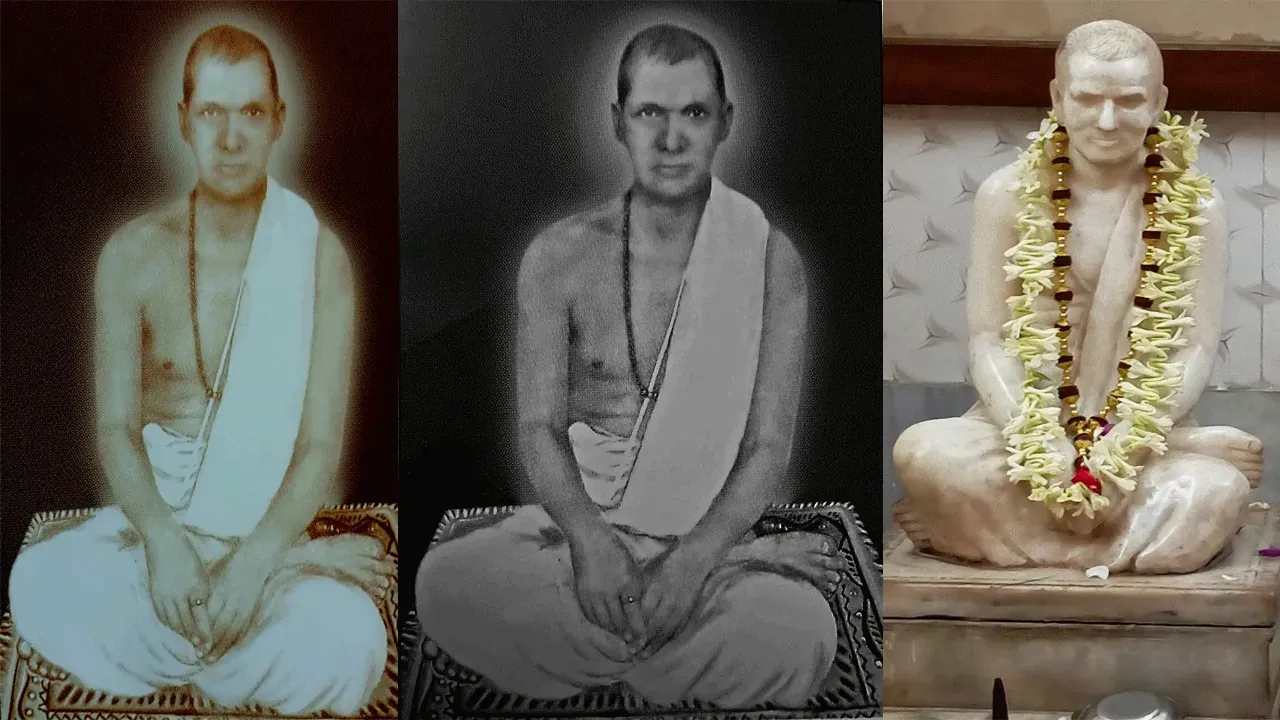
For the propagation and expansion of Sanatana Dharma, Bhaduri Mahashay, also known as Maharshi Nagendranath, established the Sanatana Dharma Pracharini Sabha in 1891. Thereafter, he actively advanced the propagation of Sanatana Dharma across India. In this journey, his constant companion became his nephew, Nanilal. Bhaduri Mahashay regarded Nanilal as his spiritual son and initiated him into Brahmacharya. After receiving Brahmacharya initiation, Nanilal came to be known as Dhyanaprakash Brahmachari.
He studied at Bhaduri Mahashay’s established Patriot Institute and later completed his Entrance examination before joining Ripon College for his F.A. studies. He served for only three days at Mackinnon Mackenzie & Co. When arrangements were being made for his marriage, he left home and subsequently embraced a life of spiritual practice under the guidance of Bhaduri Mahashay, following the Yoga-Bhakti path established by him.
Speaking about his life, Shibani Bhattacharya Bandyopadhyay, a female member of his family lineage, states that it is said he observed strict Brahmacharya discipline throughout his spiritual life and took food only once a day. For this reason, he not only followed a strict vegetarian diet but is also believed to have refrained from the use of fire altogether. For the propagation of Sanatana Dharma, he travelled to various places, mostly on foot and alone. Rather than relying on complex scriptural interpretations, he propagated Sanatana Dharma in simple and accessible language. His primary objective was to cultivate and strengthen love and devotion for Sanatana Dharma among its followers.
During Bhaduri Mahashay’s period of austerities in Munger, Dhyanprakash Brahmachari remained his constant companion. In the final phase of his sadhana, when Maharshi Nagendranath entered a secluded phase of yogic practice, Dhyanprakash Brahmachari was entrusted with the responsibility of attending to all his needs. He remained ever vigilant to ensure that the Maharshi’s spiritual practices were not disturbed.
According to accounts found in the world-renowned autobiography of Paramahansa Yogananda, there is mention of a devoted disciple who served as the constant companion of Maharshi Nagendranath during his yogic seclusion. It is not difficult to understand that this devoted disciple was none other than Dhyanprakash Brahmachari.
It is said that, by the blessings of Bhaduri Mahashay, he attained the Ashta Siddhis during his spiritual life. It is also believed that before entering Mahasamadhi, Bhaduri Mahashay conferred all his spiritual attainments upon Dhyana Prakash Brahmachari.
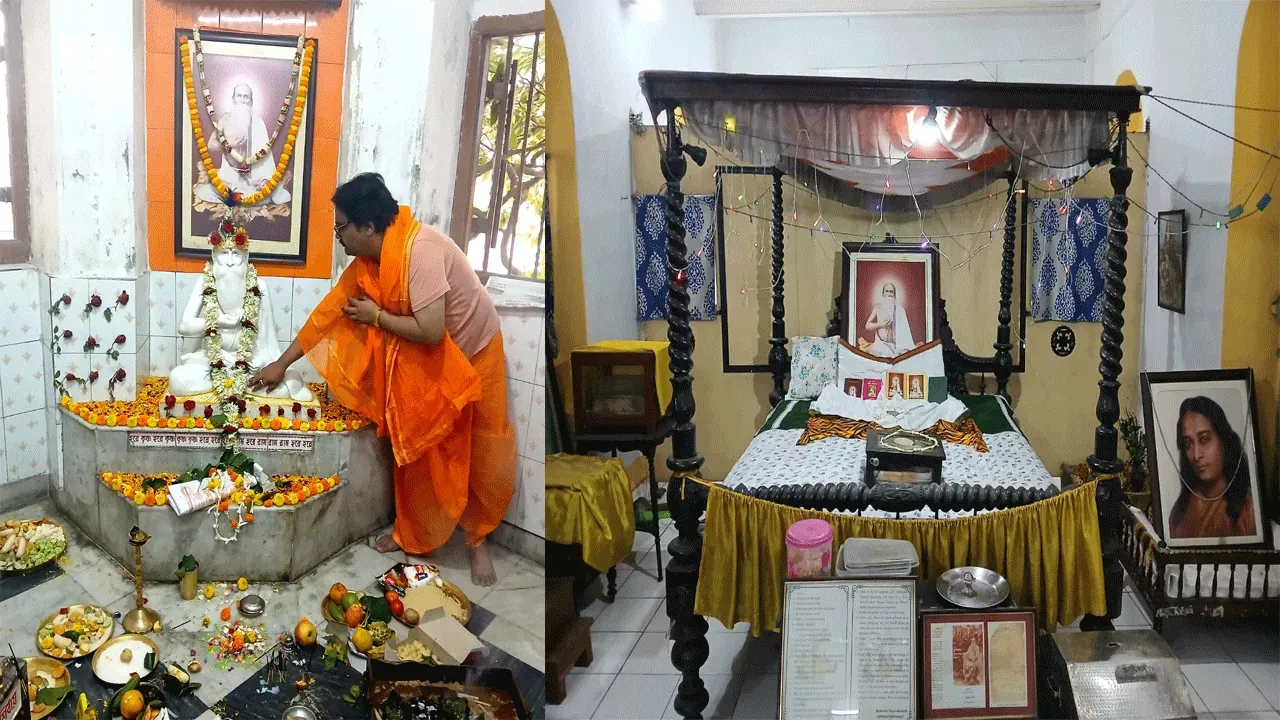
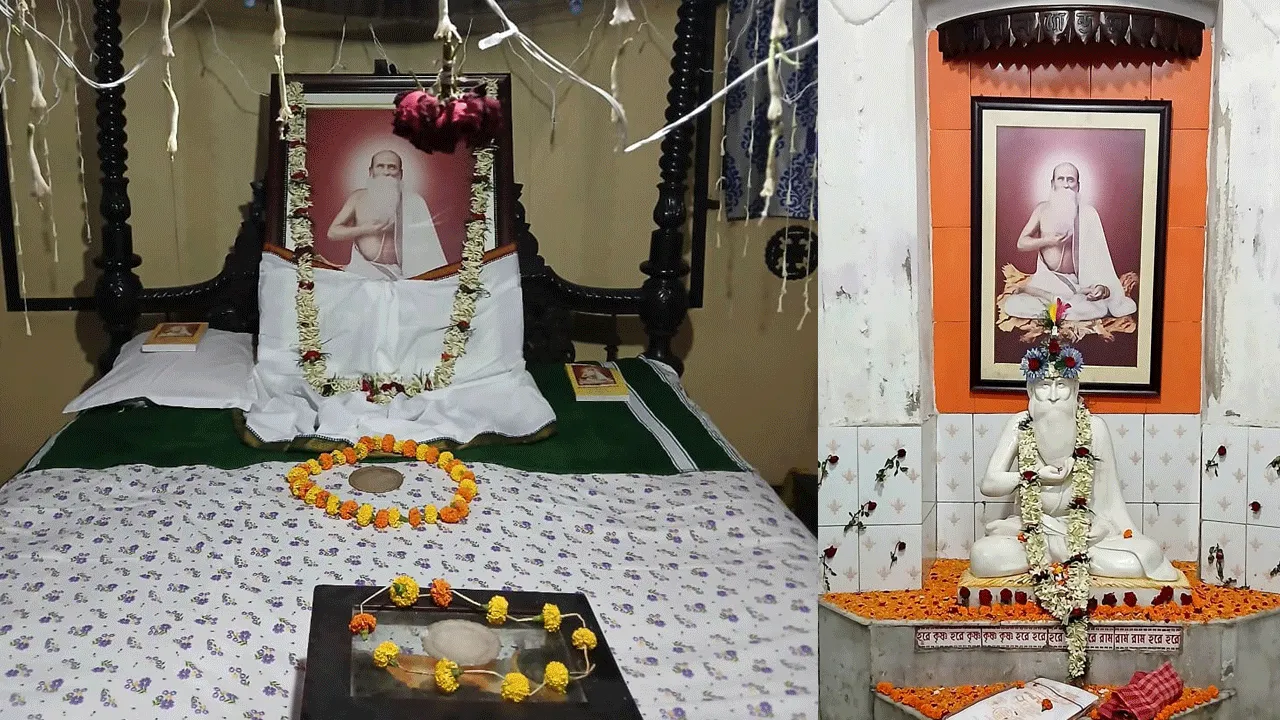
Dhyana Prakash Brahmachari performed the last rites of his guru’s physical body and brought the sacred ashes to Nagendra Math in Kolkata, where he established the sacred Guru-Brahma seat. At that site, the samadhi temple of Bhaduri Mahashay was constructed, which continues to be visited by devotees from India and abroad.
Like Bhaduri Mahashay, Dhyana Prakash Brahmachari was also dedicated to the propagation of Sanatana Dharma, though he preferred to carry out his work in seclusion. After the Mahasamadhi of Bhaduri Mahashay in 1926, he immersed himself in spiritual practice and, guided by inner inspiration, actively worked to promote Bhaduri Mahashay’s ideals. As part of this effort, he initiated the publication of Bhaduri Mahashay’s teachings and spiritual compositions, including the devotional hymns compiled in Paramartha Sangeet, through the spiritual journal Satya Pradip, founded by Bhaduri Mahashay.
Dhyana Prakash Brahmachari also compiled and published the book 'Sachitra Brahmacharya O Sharir Palan', primarily based on the ideals and instructions of Bhaduri Mahashay. On 18 May 1929, this work received favorable mention in Basumati, reflecting its growing public appreciation.
He also served as the first Mahant of Nagendra Math in Kolkata, the final place of sadhana of Bhaduri Mahashay. Dhyanprakash Brahmachari attained Mahasamadhi on 30 May 1957.
His quiet yet devoted contribution to the propagation and expansion of Sanatana Dharma holds enduring significance even today. In the context of that era, his humble and disciplined approach to spiritual service remains particularly noteworthy.
Speaking about his contribution, Dr. Subhadip Bandyopadhyay, a researcher on the life and works of Bhaduri Mahashay, remarked that from an early age, as the shadow companion of Bhaduri Mahashay, Dhyanprakash Brahmachari worked in complete anonymity. He was the backbone of Bhaduri Mahashay’s mission for the propagation of Sanatana Dharma. Much of his contribution remained outside public recognition, yet it continues to be remembered with deep respect today.








Recent News
Most Viewed
Lifestyle
Lifestyle
Lifestyle
Culture
Entertainment