

Rebuttal on Recent Media Report on Textile Recycling in India
Recent International media report highlighting textile recycling activities in clusters such as Panipat (Haryana), has drawn attention to environmental and occupational aspects associated with segments of the textile recycling ecosystem in India. While isolated instances of non-compliance may arise in any industrial ecosystem, broad characterization of India’s textile sector as environmentally negligent or structurally exploitative is misleading, selective, and not representative of the ongoing regulatory strengthening, technology adoption and sustainability-focused interventions being undertaken across the country.
At the outset, it may be noted that India possesses one of the world’s largest textile recovery and recycling networks, supported by long-established value chains for reuse, repair, recycling and repurposing of textile materials. Unlike several countries where textile waste is predominantly landfilled, a substantial proportion of textile waste in India is recovered through formal and informal systems and channelised towards secondary use, fibre recovery, industrial reuse, and allied applications.
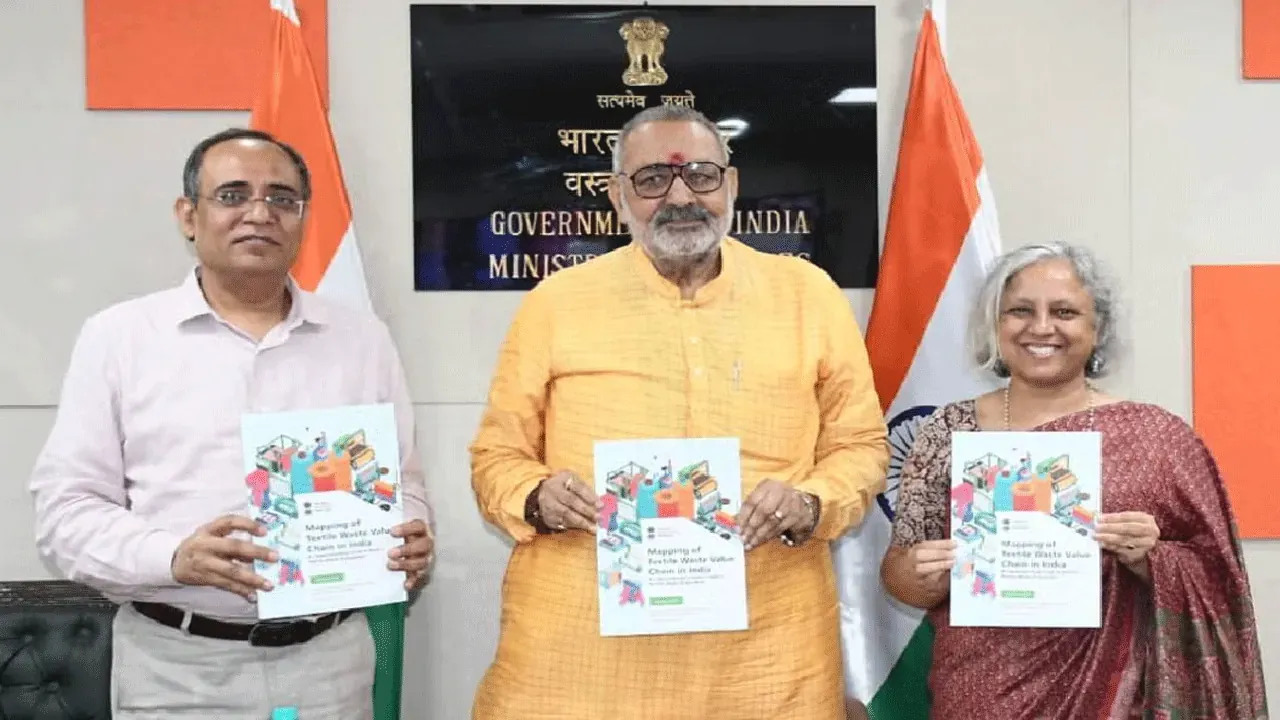
Evidence base on textile waste in India consistently indicates a significantly higher level of material recovery than is often perceived. As per the “Mapping of Textile Waste Value Chain in India” study, 2026, Ministry of Textiles, India generates approximately ~7,073 kilo tonnes of textile waste annually, comprising both pre-consumer and post-consumer streams. The study also highlights that pre-consumer textile waste generated during manufacturing processes demonstrates significantly high recovery rates; of the total pre-consumer waste, nearly 97% is recycled, indicating a high degree of material circularity already embedded within domestic manufacturing systems.
The report somewhat inaccurately suggests that India serves primarily as a "dumping ground" for Western fast-fashion waste. Data from the above-mentioned report highlights that the Indian recycling industry is predominantly driven by domestic needs. Of the approximately 7.8 million tonnes of textile waste managed annually, over 90% is sourced from domestic pre-consumer (factory scrap) and post-consumer waste. Imported post-consumer waste accounts for only approximately 7% of the total volume and is strictly regulated under the Hazardous and Other Wastes (Management and Transboundary Movement) Rules, 2016. This imported waste consists primarily of second-hand clothing and mutilated rags, largely traced through harmonised system codes. This stream is more formalized and flows primarily into the recycling and sorting ecosystem.
The FICCI report “Unlocking Value from India’s Textile Waste: A Roadmap for Circularity in the Textile Sector” further notes that India’s textile waste ecosystem currently generates an estimated economic value of ~?22,000 crore annually, with significant additional potential through improved sorting, segregation, and higher-value recycling pathways. Further, India’s reuse and repair culture has traditionally delivered significantly lower per capita textile consumption and waste generation compared to developed nations. These assessments underscore that textile recycling in India is not merely a waste management activity, but an important contributor to livelihoods, resource efficiency, and secondary material value creation.
In direct and measurable contrast to portrayals of textile recycling as environmentally harmful, rigorous Life Cycle Assessment (LCA) studies conducted by researchers at IIT Delhi - with field data collected from the Panipat cluster itself - demonstrate substantial environmental gains from India's recycling activities. Research published in the peer-reviewed Journal of Cleaner Production (2025), drawing data from the Panipat recycling cluster, quantified that textile recycling mitigates 30–40% of key environmental impacts including greenhouse gas emissions, acid rain potential, and fossil fuel depletion, compared to virgin fibre production pathways.
It is also pertinent to note that textile recycling in India is not confined to isolated units but is supported by specialised industrial ecosystems developed over several decades in clusters such as Panipat, Tiruppur, Ludhiana, Surat and other textile centres. Panipat, which is frequently referenced in media narratives, has evolved into one of major textile recycling hubs globally, processing substantial quantities of woollen and blended textile waste and supporting significant downstream employment and economic activity.
At the same time, it is recognised that certain concerns highlighted in media reports merit attention. Challenges continue to persist in relation to post-consumer textile waste collection, management of blended and synthetic textile waste, fragmented feedstock aggregation, environmental compliance among smaller informal units, and worker safety in certain segments of the value chain. However, such concerns need to be viewed within the context of an evolving sector that is progressively transitioning towards greater formalisation, strengthened regulatory compliance, adoption of cleaner production technologies, technological limitations in recycling blended textile waste, and adherence to higher environmental standards.
In this regard, it is important to note that the textile recycling sector operates within an established legal and regulatory framework governing environmental compliance, industrial operations, and worker welfare. Textile recycling and processing units are regulated under Water (Prevention and Control of Pollution) Act, 1974 and Air (Prevention and Control of Pollution) Act, 1981, with mandatory operational consent requirements from State Pollution Control Boards. The very fact that National Green Tribunal (NGT) and State Pollution Control Boards have initiated enforcement actions against certain non-compliant units demonstrates that India’s regulatory institutions are functional and active.
Additionally, occupational safety, working conditions, social security and labour welfare are governed under India’s evolving labour law framework, including Occupational Safety, Health and Working Conditions Code, 2020 (OSH Code), which consolidates provisions relating to workplace safety, health standards, welfare measures and working conditions across establishments, and Code on Social Security, 2020, which seeks to strengthen social protection coverage for workers. In addition, provisions relating to wages, industrial relations and worker protections are addressed through the Code on Wages, 2019 and the Industrial Relations Code, 2020. Regulatory oversight, inspections, and enforcement actions in cases of non-compliance are undertaken by the competent authorities in accordance with the applicable statutory framework.
Broader portrayal of Indian textile recycling industry also overlooks the substantial progress made by organised and export-oriented recyclers in adopting environmentally responsible and worker-safe practices. India's textile recycling ecosystem is rapidly moving beyond conventional mechanical recycling towards cutting-edge chemical recycling technologies capable of recovering fibres at the molecular level and enabling true textile-to-textile circularity. Multiple textile units have invested in advanced recycling technologies, dust extraction systems, zero-liquid discharge (ZLD) wastewater treatment, and renewable energy integration. Tiruppur’s textile cluster, in particular, is globally recognised for its near-universal adoption of ZLD systems in dyeing and processing units, demonstrating India’s capability to implement high environmental standards at scale. In several states such as Tamil Nadu, Gujarat, and Haryana, textile units are increasingly transitioning towards sustainable and resource-efficient manufacturing practices through adoption of low-liquor dyeing technologies, advanced water recycling systems, digital process monitoring mechanisms, and energy-efficient processing infrastructure aimed at reducing environmental footprint and improving operational efficiency.
India's technical textile recycling capabilities are not limited to conventional apparel and household textiles. A strategic area of growing national importance is the recycling of high-value technical textile waste streams — including defence-grade fibres, automotive textiles, aerospace composites and other technical textile waste — that have typically been disposed of through incineration or landfill globally due to the technical complexity of their recycling. In defence and protective textiles, India has made a globally significant advance: the Atal Centre of Textile Recycling and Sustainability (ACTRS), established at Panipat by IIT Delhi under the National Technical Textiles Mission (NTTM), has developed and successfully transferred to industry the first-of-its-kind process for recycling high-performance aramid fibre waste — the material used in bulletproof vests, protective gears, helmets, and armoured vehicle components. Complementing this, the NTTM has approved a dedicated portfolio of research projects covering composites, geosynthetics, specialty fibres, and structural materials with direct applications in automotive lightweighting, sports protective equipment, and aerospace structures — laying the foundation for a systematic, high-value technical textile recycling ecosystem in India.
In view of above, while media reports may draw attention to specific operational concerns in certain locations, such instances are not representative of the textile recycling ecosystem in India as a whole. India’s textile recycling sector has a strong underlying foundation characterised by significant scale, established recovery pathways, and substantial circularity, and continues to transition towards improved environmental performance, formalisation, and sustainability in alignment with national priorities.
Ministry of Textiles remains committed to supporting a globally competitive, environmentally responsible, and socially inclusive textile sector aligned with India’s broader objectives of sustainable growth, resource efficiency, and circular economy.







Recent News

Most Viewed
Lifestyle

Lifestyle

Lifestyle

Culture

Entertainment