
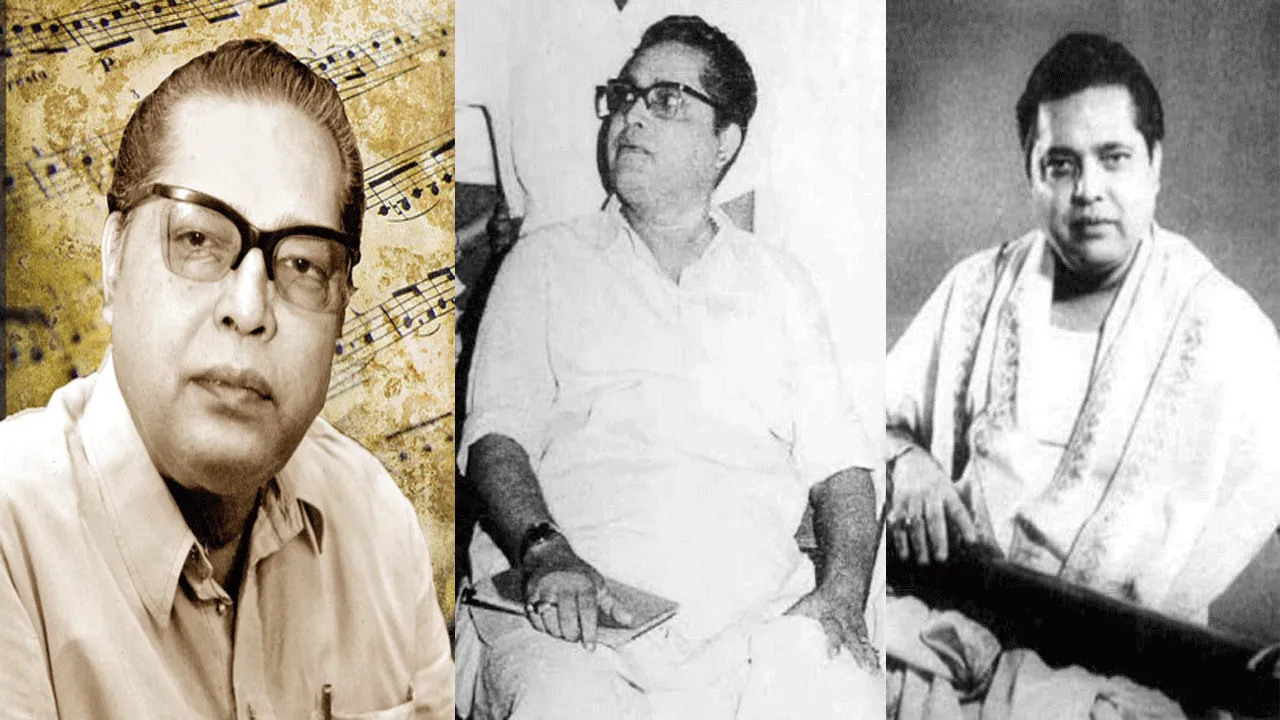
Dhananjay Bhattacharya’s Songs: A Journey Back to an Era
‘Ruma Jhuma Jhum Badal Jhore’—when this song, in Dhananjay Bhattacharya’s unmistakable voice, begins to play, time seems to stand still. For a moment, the bustle of the present fades, and the mind drifts back to an older Bengal—a time when music was an expression of feeling, and few voices conveyed that feeling as deeply as Dhananjay’s.
10 September marks his birth anniversary. It is an occasion to remember one of Bengali music’s most distinctive voices, whose talent was evident from an early age. At an event at Uttarpara Rajbari, the celebrated Bengali novelist Sarat Chandra Chattopadhyay was captivated by the singing of seven- or eight-year-old Dhananjay. He rewarded the young singer with five rupees—an amount that remained a treasured memory throughout Dhananjay’s life.
Music was woven into Dhananjay’s family life. His father, Surendranath, was a skilled sitar and esraj player. Dhananjay later trained in classical music under Gokul Nag and Satyen Ghosal, grounding his naturally expressive voice in a strong classical tradition. Songs such as ‘Trinayani Durga’, ‘Jhanan Jhanan Baje Sur Bahare’, ‘Ruma Jhuma Jhum Badal Jhore’ and ‘Jhanana Jhanana Baje’ reflect the breadth of his artistry.
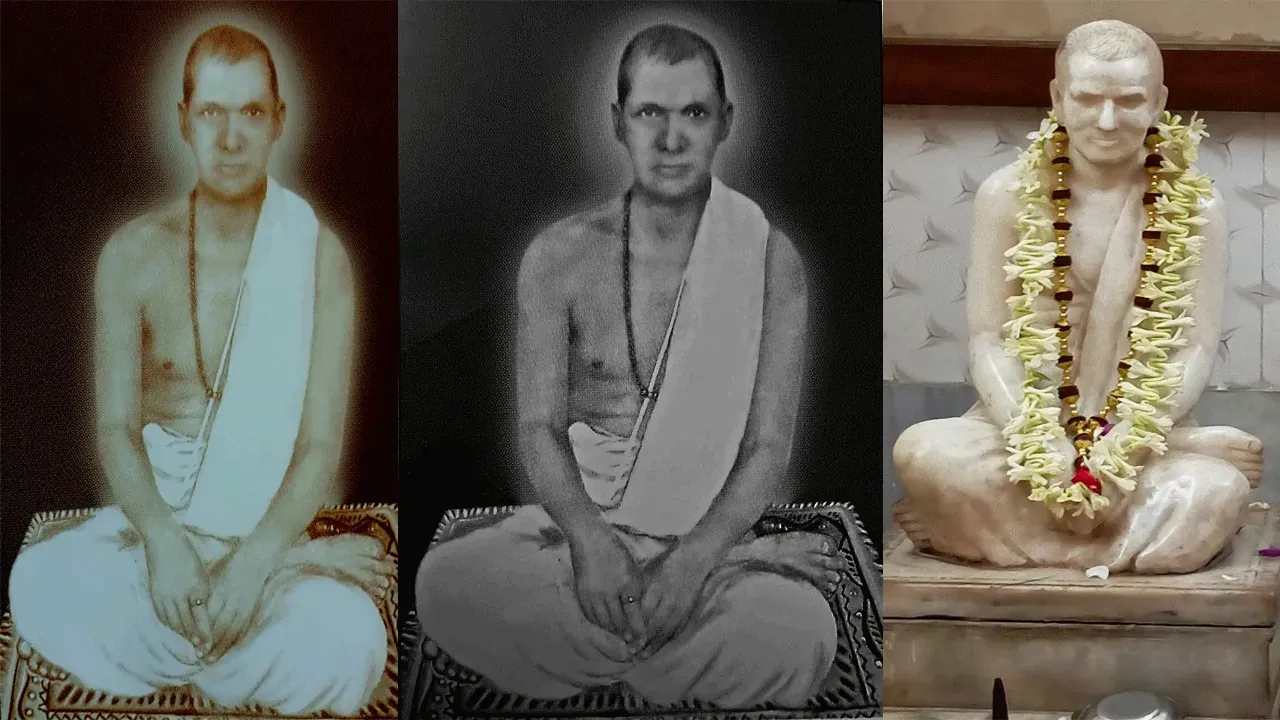
His Shyama Sangeet and devotional songs carried a particular intensity. His voice conveyed more than melody; it carried devotion, surrender and deep feeling. That quality was also rooted in his family’s spiritual heritage. His father’s paternal uncle was the yogic practitioner Bhaduri Mahashaya, also known as Paramahamsa Maharshi Nagendranath. The family’s traditions of Vaishnavite devotion, Tantric practice and yoga left a lasting impression on Dhananjay’s musical sensibility.
But Dhananjay was never confined to a single genre. He moved between modern Bengali songs, Nazrulgeeti, Rabindra Sangeet, film songs and devotional music, leaving his own distinctive imprint on each. Among the memorable songs composed by his elder brother, Prafulla Bhattacharya, are ‘Basarer Deep Aar Akasher Taraguli’, ‘Hridaye Mor Rakt Jhare’ and ‘Phul Go Tomare Chhuye’. He also brought a distinctive quality to compositions by Salil Chowdhury, Sudhin Dasgupta, Satinath Mukhopadhyay and Shyamal Mitra, among others.
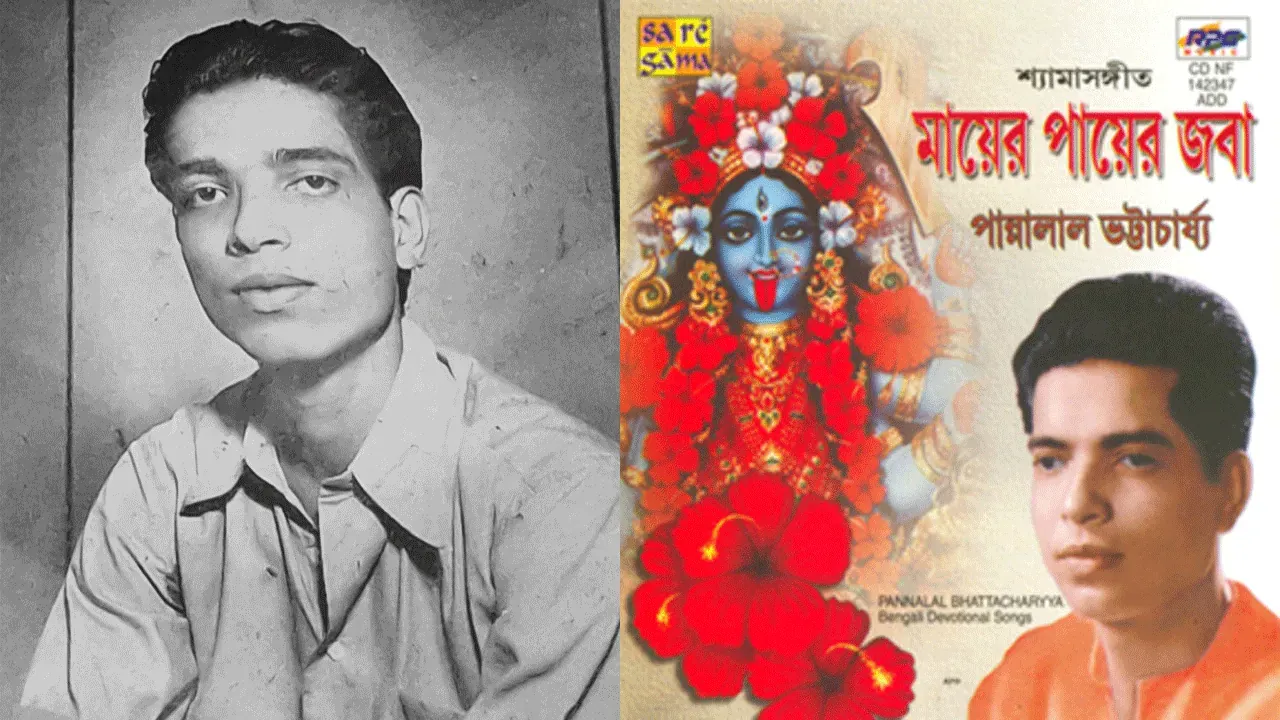
His musical partnership with his younger brother, Pannalal Bhattacharya, occupies a special place in his legacy. ‘Apar Sansar Nahi Parapar’ remains one of their memorable collaborations.
Dhananjay’s talents extended beyond singing. He composed music for films including ‘Joy Maa Tara’, ‘Ladies Seat’ and ‘Batasi’, and acted in ‘Pasher Bari’, ‘Shashurbari’ and ‘Nababidhan’, among others. Dr Bidhan Chandra Roy was one of his admirers and bestowed on him the title ‘Swarna Kantha’, or ‘Golden Voice’.
Dr Shubhadip Bandyopadhyay, Prafulla Bhattacharya’s grandson through his daughter, recalls that Dhananjay’s voice carried far more than melody—it conveyed profound emotion. In devotional songs, he conveyed surrender; in songs of love, tenderness and longing. In both, his singing had an unmistakably personal quality.
Much has changed since Dhananjay’s time. The way people listen to music has changed, as have musical tastes and styles. Yet when one of his songs happens to play, the years seem to fall away. A familiar melody brings back an era, an atmosphere, sometimes even a forgotten memory.
That is the measure of Dhananjay Bhattacharya’s enduring legacy. His songs do not simply belong to the past; they continue to reach listeners across generations. His voice still lingers in the memory—a voice carrying the emotional imprint of an era that has passed, but never quite faded away.








Recent News


Most Viewed
Lifestyle
Lifestyle
Lifestyle
Culture
Entertainment