

IAS Officer Trainees from LBSNAA to Visit NIT Durgapur as Part of Winter Study Tour
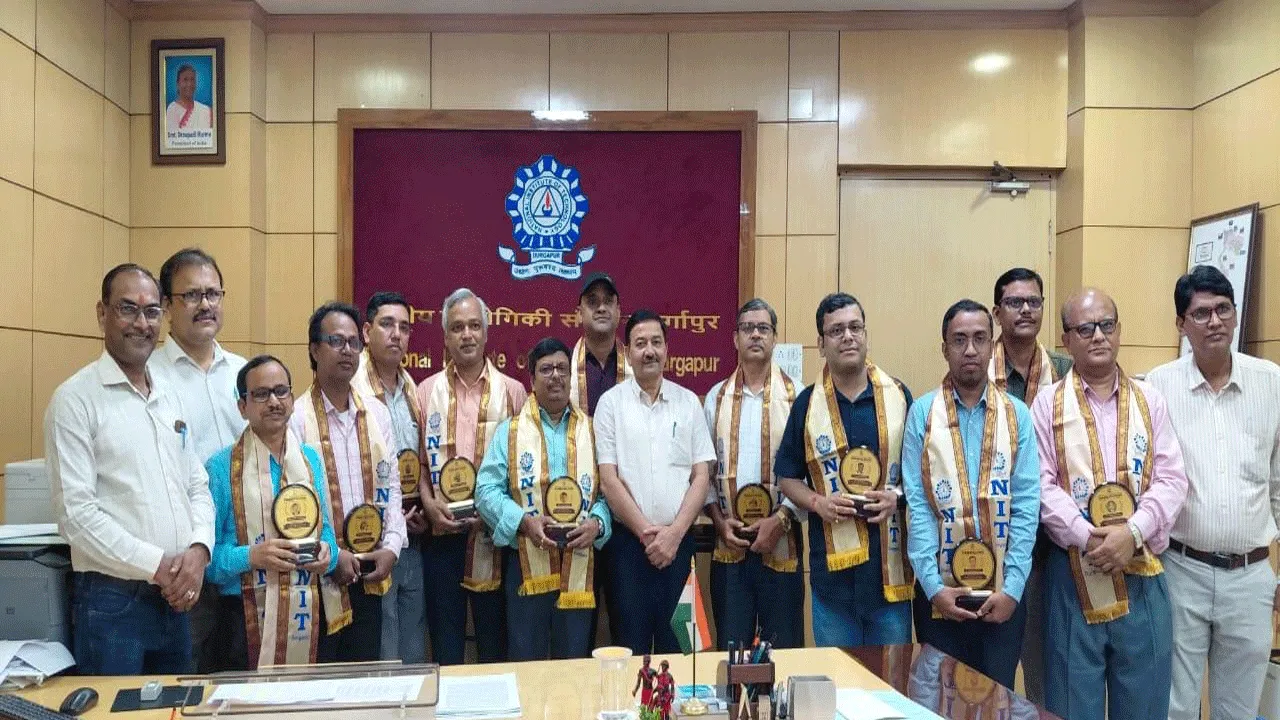
As part of the Winter Study Tour (WST) of the Indian Administrative Service (IAS) Professional Course, a group of IAS Officer Trainees from the Lal Bahadur Shastri National Academy of Administration (LBSNAA), Mussoorie, will visit the National Institute of Technology Durgapur on 17 March 2026 (Forenoon).
The Winter Study Tour is an integral component of the IAS Professional Course, wherein officer trainees are attached to various organizations in both the public and private sectors across the country. The objective of the programme is to provide future administrators with first-hand exposure to the conceptualization, implementation, and impact of major technological, social, and infrastructure initiatives.
This year, the Winter Study Tour has been redesigned to align with the ten Sectoral Groups of Secretaries (SGoS) of the Government of India, spanning all six geographical zones of the country. The programme is being conducted in three segments of two weeks each. The third segment of the Winter Study Tour, scheduled from 7 March to 22 March 2026, focuses on providing sectoral exposure in the domains of Social Development, Rural & Agriculture, Governance, and Technology.
In this context, NIT Durgapur has been selected as one of the academic and research institutions where the IAS Officer Trainees will gain experiential insights into technology-driven innovations with societal impact. During their visit, the trainees will interact with faculty members and researchers and will be introduced to several cutting-edge research projects currently being undertaken at the institute.
Some of the key research initiatives that will be showcased during the visit include:
* Next-Generation Phase-Change Semiconductor Coatings for smart windows and spacecraft thermal control
* Cognitive Load Assessment Methods for the Blind during adaptation to new assistive technologies
* 5G Use Case Laboratory for advanced communication research
* Machine Learning-enabled RISC-V based i-LoRa SoC for forest event monitoring
* Monitoring of Antibiotics, Heavy Metals, Radioactive Elements, and Water Quality Parameters in the Damodar river basin along with development of water treatment technologies
* Improved Energy Management and Control of a Hybrid Unmanned Ground Vehicle (UGV) for combat applications
* ADKIT – Smartphone-based Artificial Intelligence-enabled Portable Low-cost Anaemia Detection Kit based on observation of nail and palm pallor
* IoT-enabled Breast Carcinoma Screening Point-of-Care Device
* Capacity Building for Human Resource Development in Unmanned Aircraft Systems (Drone Technology)
* Development of Less Toxic and More Effective Pt(II)-based Anticancer Drug Candidates
* Development of Guidelines for Increasing the Height of Overburden Dumps in Open Cast Coal Mines using jute-geotextile reinforcement
The visit aims to provide the officer trainees with a deeper understanding of how academic research and technological innovation can address real-world challenges in healthcare, environmental monitoring, sustainable infrastructure, and advanced technologies.
Through this interaction, the institute hopes to strengthen the linkage between academia, governance, and policy-making, enabling future administrators to appreciate the role of scientific research and technological innovation in addressing national developmental challenges.




Recent News

Most Viewed
Lifestyle
Lifestyle
Lifestyle

Culture
Entertainment