

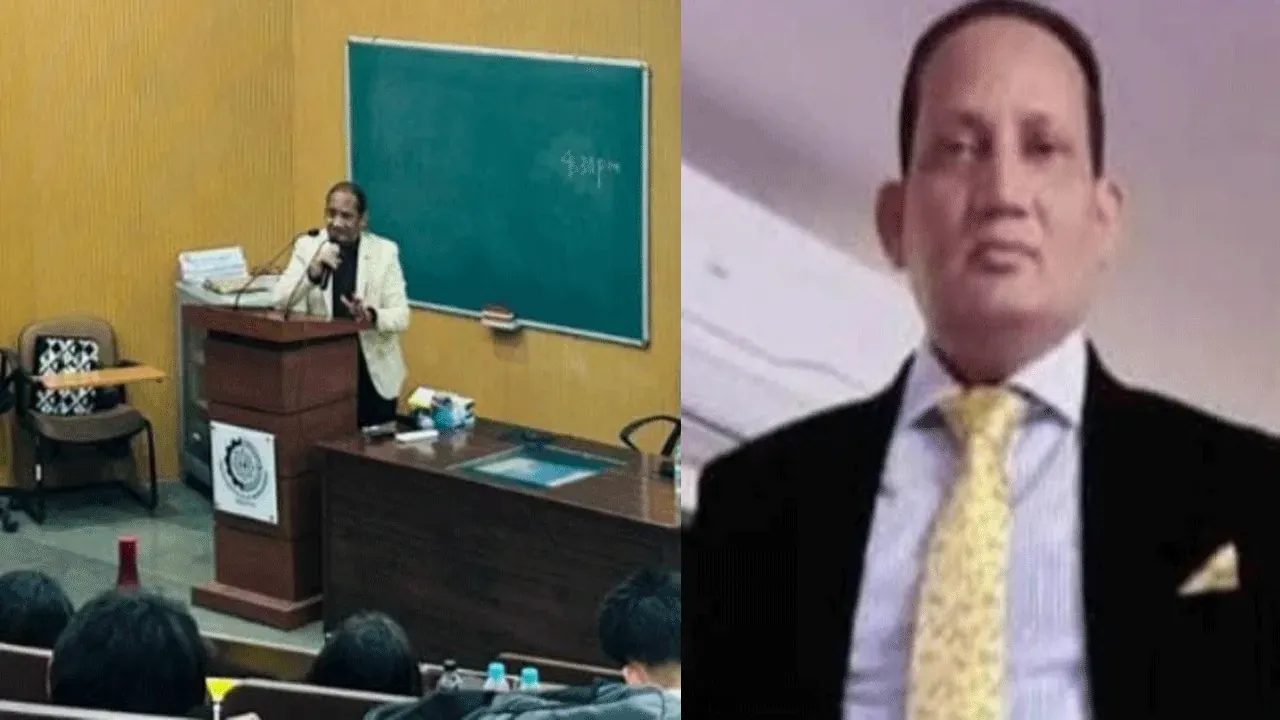
India’s vision of becoming a developed nation, nearly $30-trillion economy by 2047
At a lecture delivered at the IIM, Kolkata, senior IRS officer Ajay Keshari said that India’s vision of becoming a developed nation and a nearly $30-trillion economy by 2047 represents a comprehensive strategic transformation agenda. He said the objective goes beyond mere economic expansion and is rooted in a broader national development framework built on strategic management, long-term capital formation, institutional governance and economic scalability.
Keshari highlighted that contemporary economic and management research underscores the importance of data-driven policymaking, result-oriented governance, total factor productivity and multi-sectoral policy integration for sustained long-term growth. According to him, the Government of India’s initiatives in expanding infrastructure, strengthening digital public infrastructure, promoting manufacturing and boosting exports form part of a broader development architecture aimed at enhancing economic capacity and competitiveness.
Elaborating on the concept of economic scalability, he said that a nation’s economic potential expands significantly when production systems, investment flows, technological capabilities, logistics networks and human capital are integrated efficiently. Such integration improves operational efficiency, resource allocation optimisation and productivity enhancement, enabling economies to move closer to the global productivity frontier. In this context, India’s development strategy is increasingly focusing on supply-chain optimisation, industrial cluster development and deeper integration with global value chains (GVCs).
Addressing management students, Keshari emphasised that the role of MBA graduates and management professionals in the coming decades will extend beyond conventional corporate leadership. He encouraged students to work towards employment-oriented entrepreneurship, business model innovation and market-driven product development, which can contribute to both economic expansion and job creation. Management education, he said, must increasingly focus on value chain strengthening, cost leadership and building sustainable competitive advantage.
He further highlighted that in today’s highly competitive global economy, success depends on the effective adoption of quality-driven production systems and cost optimisation strategies. Strengthening competitiveness requires greater emphasis on cost efficiency, strategic marketing, technological upgradation, quality management and innovation-driven productivity improvements, he added.
Keshari also highlighted the growing importance of collaborative innovation ecosystems linking academia, research institutions and industry. Such collaboration can accelerate technology transfer, research commercialisation, deep-tech entrepreneurship and the development of knowledge-driven enterprises, thereby strengthening the country’s innovation capabilities.
Looking ahead, he said that endeavours to attract greater investments in research and development, innovation and intellectual property creation indicate that India may gradually transition from a purely production-oriented economy towards a knowledge-based economy driven by endogenous growth and intellectual-property-led value creation. He added that R&D expenditure could rise to around 2–3 per cent of GDP over the next two decades, which may bring transformative changes to India’s innovation ecosystem and enable the country to develop and export proprietary technologies, patents and innovations to global markets.
He highlighted that strategic management will play a crucial role in aligning policy frameworks, industry capabilities and innovation ecosystems to achieve this transition. By integrating long-term planning, performance metrics and coordinated institutional action, strategic management can enable efficient resource allocation and accelerate India’s move towards a knowledge-driven, high-productivity economy.
He concluded on a positive note that through strategic management, innovation-led industrial development, Industry 5.0 integration, digital public infrastructure and stronger participation in global value chains, supported by a citizen-centric development approach and the collective contribution of all stakeholders, India will emerge by 2047 not only as a larger economy but also as an innovation-driven, competitive and resilient economic power in the global landscape.







Recent News




Most Viewed
Lifestyle

Lifestyle

Lifestyle

Culture

Entertainment