

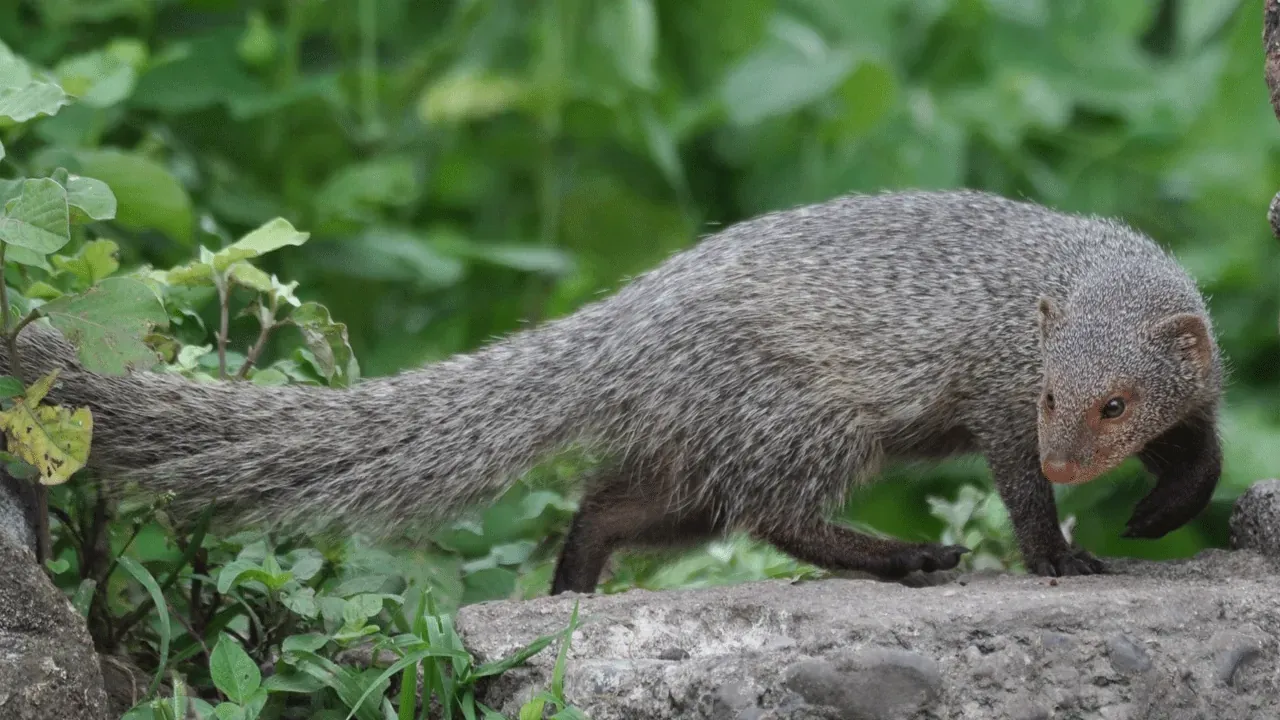
India’s Fight Against Illegal Mongoose Trade
Scientists Publish first Comprehensive Hair-based Identification System for all Indian Mongoose Species. New Scientific Study Strengthens India’s Fight Against Illegal Mongoose Trade.
India is home to six species of mongooses- Small Indian Mongoose, Indian Grey Mongoose, Indian Brown Mongoose, Ruddy Mongoose, crab-eating Mongoose, and Stripe-necked Mongoose. These small carnivorous mammals play a crucial ecological role by regulating populations of rodents, snakes, birds, and various invertebrates. Despite their ecological importance, they face severe pressure from illegal wildlife trade, primarily driven by the demand for mongoose hair used in high-quality paint brushes.Every year, an estimated 100,000 mongooses are killed, with nearly 50 animals required to produce just one kilogram of usable hair. These brushes are sold within India and smuggled internationally to markets in the Middle East, the United States and Europe often without consumer awareness of their illegal origin. Major trafficking routes pass through Uttar Pradesh, Maharashtra, and Tamil Nadu, while international smuggling commonly occurs via Delhi, Mumbai, Kolkata, and across the Indo-Nepal and Indo-Bangladesh borders.
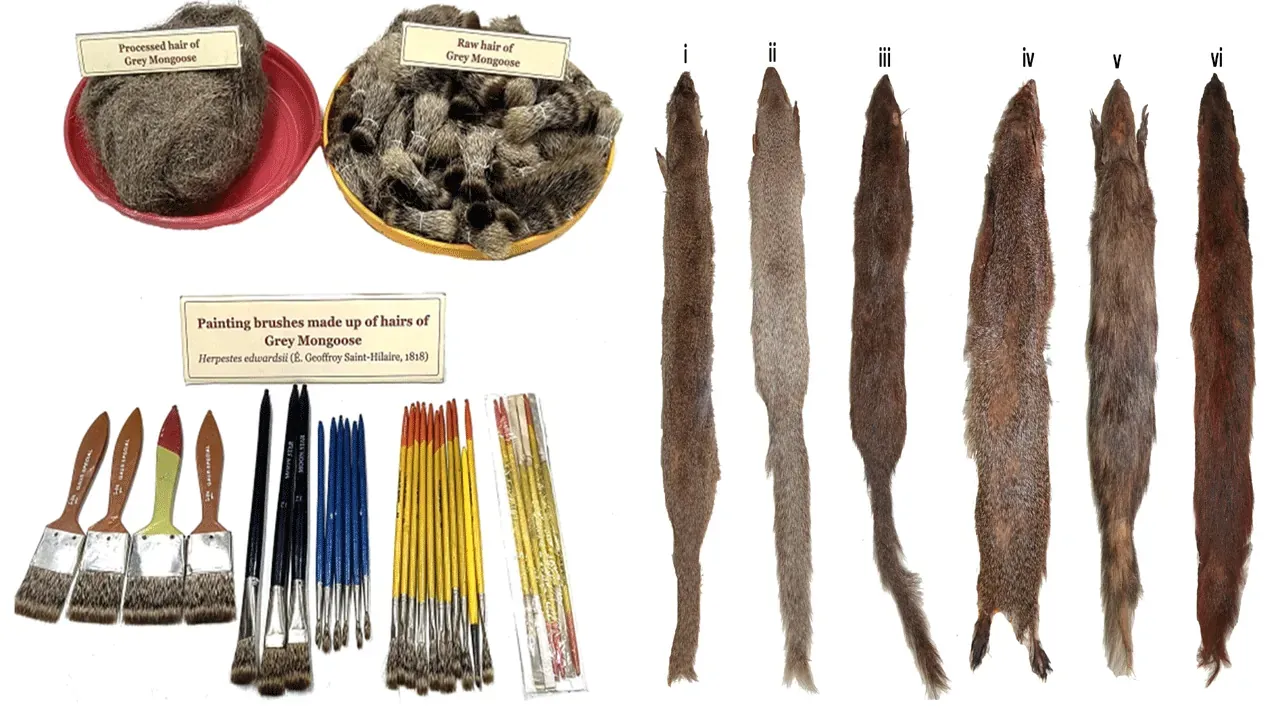
To strengthen legal protection, all six mongoose species were progressively elevated under the Indian Wildlife (Protection) Act, 1972, ultimately being placed in Schedule I, the highest protection category. Despite these measures, enforcement agencies often face challenges in identifying mongoose hair in confiscated items. Modern paintbrush processing removes the follicle and basal region of the hair, leaving no nuclear DNA. Mitochondrial DNA recovery is also frequently unsuccessful due to chemical processing and degradation. In such cases, tricho-taxonomy the study of hair structure provides a practical, rapid, and non-destructive method for species identification.
A development toward this goal has been achieved through a new study published in Discover Conservation, which presents the first complete tricho-taxonomic identification system for all six Indian mongoose species. The diagnostic features documented in this work provide a rapid and non-invasive method for identifying confiscated mongoose hair, thereby supporting law enforcement agencies in combating illegal wildlife trafficking. The study was carried out using museum specimens housed at the Zoological Survey of India (ZSI).
Dr. M. Kamalakannan, Scientist at the ZSI, who conceptualized and co-led the study, said: “This research fills a critical forensic gap by providing species-level identification tools based entirely on hair morphology. It will greatly assist wildlife enforcement agencies in identifying mongoose hair in seized items and curbing illegal trade. The study will also serve as a useful and cost-effective reference for identifying mongoose species in India.”
Dr. Shantanu Kundu, foreign collaborator from Pukyong National University, Republic of Korea, added, “Our combination of microscopic analysis and statistical modelling provides a scientifically solid baseline. These findings can also complement future molecular or DNA-based approaches to further enhance accuracy in species identification.”
Dr. Dhriti Banerjee, Director, ZSI, commended the team, “As an authorised organisation of the Government of India, the ZSI, functioning under the Ministry of Environment, Forest and Climate Change (MoEFCC), regularly receives confiscated materials from enforcement agencies across the country, including paintbrushes suspected to contain mongoose hair, for species identification. ZSI provides the scientific analysis required to support investigations and curb illegal trade. This study further strengthens our wildlife forensic capabilities and will assist frontline agencies in protecting India’s native biodiversity.”
Citation: Roy, M., Kundu, S. & Kamalakannan, M. Tricho-taxonomic profiling of Indian mongoose guard hairs reveal potential applications in wildlife forensics and species conservation. Discover Conservation 2, 42 (2025). https://doi.org/10.1007/s44353-025-00060-0








Recent News




Most Viewed
Lifestyle

Lifestyle

Lifestyle

Culture

Entertainment