
Saras Food Festival 2025
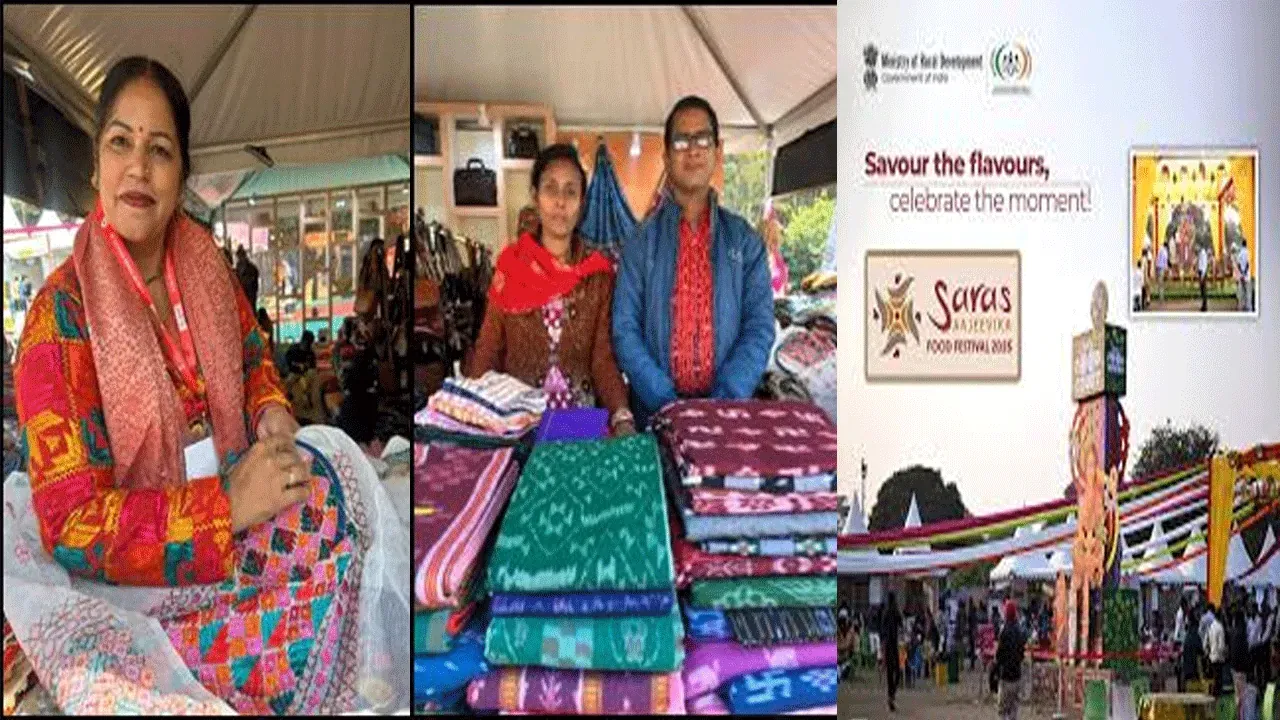
On a crisp December morning at Delhi’s Sunder Nursery, the lawns were alive with the hum of a crowd eager to taste India’s finest regional dishes. But at one stall near the entrance, something else was drawing people in, an infectious confidence, the kind that radiates from someone who knows she has changed not just her own life, but the lives of hundreds of others. Behind the counter stood Mrs. Vandana Bharadwaj from Mohali, Punjab, arranging her Phulkari fabrics with practiced ease. The vibrant embroidery shimmered under the winter sun, but it was her journey that sparkled brighter. She began her journey in 2018 as one of ten women in a small SHG, stitching Phulkari at home while managing household responsibilities. Her leadership soon stood out. First, she headed 19 SHGs in her village organisation and later as the anchor for a growing network of women who trusted her guidance. Today, Vandana leads over 500 Self-Help Groups (SHGs) across 25 villages, a community enterprise larger than many formal institutions. Her stall at the Saras Food Festival 2025 showcased not just handcrafted products but also the collective progress and empowerment of women.
Vandana didi explains, “The government supported us at every step.” We received sewing machines and Rs. 30,000 as working capital from the Ministry of Rural Development. These interventions helped us transform Phulkari stitching into a real enterprise. Under her leadership, rural women now produce a diverse range of items, including sweaters, school uniforms, and especially high-quality Phulkari fabrics. Their craftsmanship is so refined that government departments purchase their phulkari products to present to national and foreign dignitaries. The government also procures its goods to export to other countries.
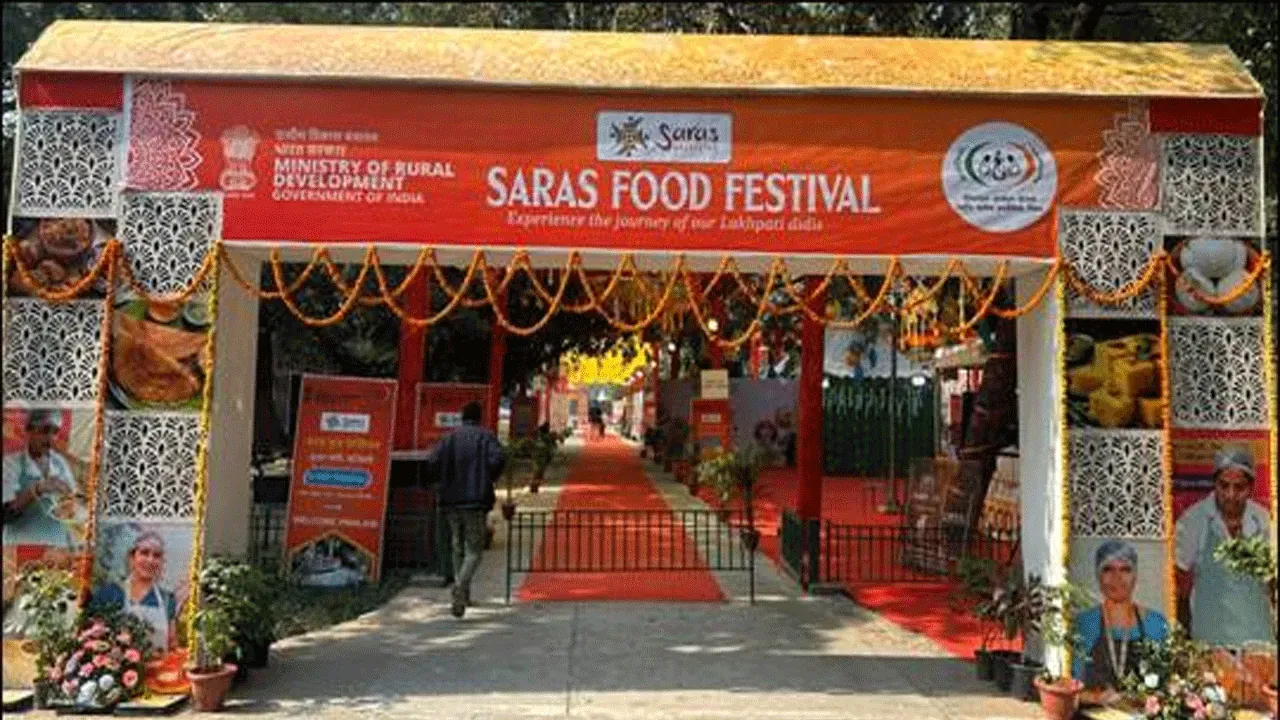
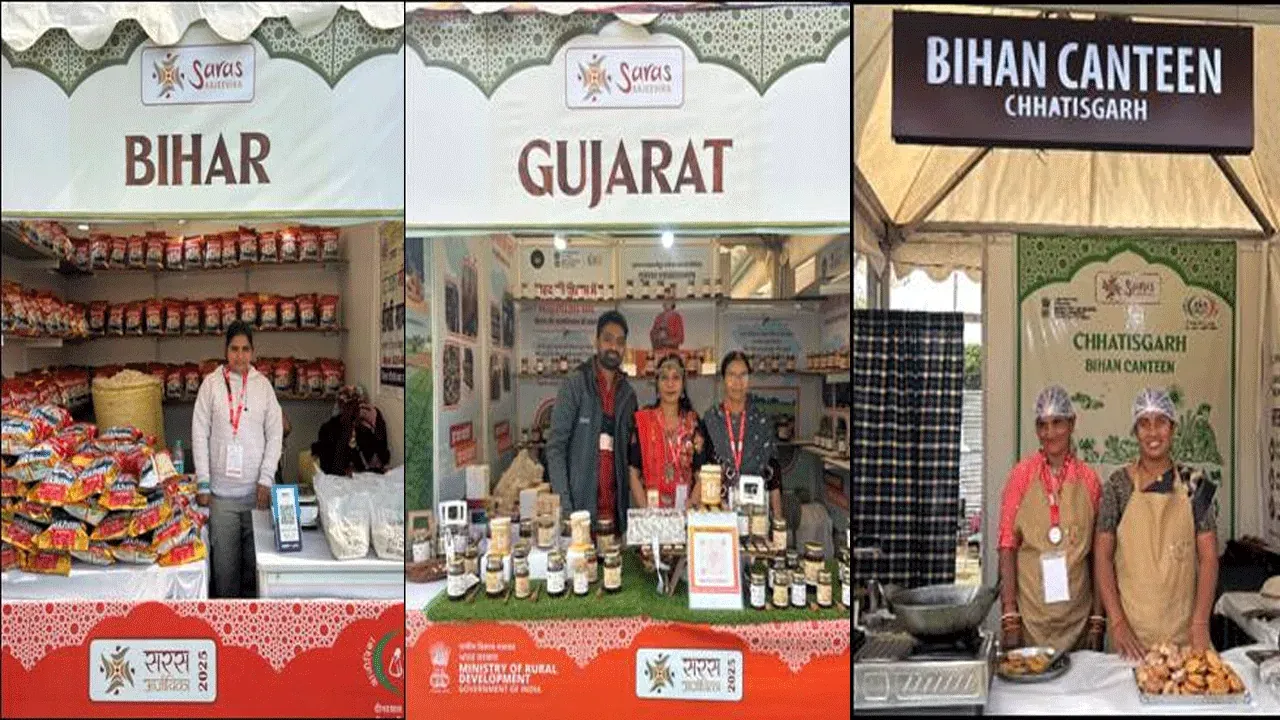
Across Sunder Nursery, the same spirit reverberated through every lane of the Saras Food Festival 2025. Nearly 300 Lakhpati Didis and SHG entrepreneurs from 25 states had arrived, bringing more than 500 dishes and dozens of handcrafted products, transforming Delhi into a living map of India. The air carried the scent of dal baati churma, Malabar biryani, Himachali siddu, and tandoor tea, but behind each aroma was a woman with a story as layered as her recipe.
The Saras Aajeevika Melas, organised by the Ministry of Rural Development under DAY-NRLM, provide rural women and self-help groups a national platform to sell their products directly, eliminate middlemen, and gain vital market exposure. Through workshops on packaging, design, communication, and marketing, the Melas equip them with skills to upgrade their products, increase incomes, and connect with buyers from across the country and beyond.
Just across from Vandana didi’s stall, a member from Maa SHG from Odisha had set up her handloom display. Having joined the SHG in 2019, she transitioned from local sales to operating her own shop and supplying products to retailers.
“We were local weavers earlier,” she remarked modestly. After joining the SHG, we received support, accessed easy credit, and benefited from regular visits by government officials who helped address our business needs and ensured the timely supply of required materials. At one of the Saras melas, she recorded sales of Rs. 5 lakh in Ikkat cotton fabrics, a milestone her group recalls with both pride and astonishment. As Delhi customers explored the handwoven fabrics, the women managed digital payments with ease. She emphasized that she also used the BHASHINI mobile application for real-time, voice-based language translation while interacting with buyers, effectively removing linguistic barriers through technology.
A few stalls away, Mrs. Preeti Sahu was serving Andhra-style delicacies while simultaneously managing orders for her Raj Bihan Canteen in her home district. Having joined her self-help groups (SHG) in 2012 with 10-15 women, she accessed affordable credit through banks and village-level institutions, enabling her to expand her enterprise. She now earns over Rs. 50,000 per month, with her sales at Saras Mela typically reaching Rs. 2–2.5 lakh. Throughout the interaction, digital payments continued to arrive on her phone, with a QR code prominently displayed at her counter. Cash transactions were minimal, reflecting the high level of digital proficiency among SHG members, who independently managed and recorded all transactions with notable efficiency.
Further along the row of stalls, Mrs. Maya Devi from Saharsa, Bihar, was showcasing makhana products as the morning footfall increased. Previously a homemaker, she joined her Jeevika SHG in 2014, beginning with a weekly saving of Rs. 10. With accessible credit and consistent institutional support, she gradually developed her makhana enterprise. Now, she stands at a national platform in Delhi, explaining the uses of her products, processing QR-based transactions, and articulating how collective empowerment has enabled her to build a sustainable livelihood.
Among the exhibitors was Mrs. Daksha Mehta from Junagarh, Gujarat, dressed in a beautiful traditional Gujarati attire and representing the Mahadev Mangalam SHG, which she joined in 2022. Since then, she has generated sales exceeding Rs. 5 lakh through Saras Mela. Expanding beyond physical fairs, she ventured into e-commerce by listing her products on Amazon, which enabled nationwide distribution and transformed her customer base. As she mentioned, “The fairs gave us a platform.”
Collectively, these narratives reflect the broader impact of the Deendayal Antyodaya Yojana -National Rural Livelihood Mission (NRLM), which has long supported women’s entrepreneurship through SHGs, credit linkages, capacity-building programmes, and national-level marketing platforms. The mission has facilitated the emergence of over 2 crore “Lakhpati Didis,” with a targeted increase of 2.5 crore in FY 2024–25. Equally transformative is the digital empowerment that these women have achieved. Tools such as BHASHINI have addressed linguistic constraints, while UPI-based payments have promoted financial inclusion, together strengthening women’s confidence and autonomy in economic activities.
Deendayal Antyodaya Yojana - National Rural Livelihood Mission (DAY-NRLM) is the Ministry of Rural Development’s flagship rural poverty alleviation programme that helps poor households secure sustainable livelihoods through self-employment and skill-based employment opportunities. It focuses on mobilizing rural households into Self-Help Groups (SHGs) and supporting them over time, enabling them to undertake income-generating activities and steadily rise out of poverty. It is one of the world's largest initiatives aimed at improving the livelihoods of the poor. As of December 5, 2025, DAY-NRLM has mobilized 10.20 crore households into SHGs. A Lakhpati Didi is a Self-Help Group member whose household earns at least ?1,00,000 annually, with a sustained average monthly income of ?10,000 over at least four agricultural seasons or business cycles.
As the day turned to evening and cultural performances lit up the garden, the festival felt less like an event and more like a revelation. Women who had once doubted their ability to speak in a crowd were now interacting with customers from across the world, translated, understood, and respected. Women who once managed only household finances were now managing digital wallets, orders, and invoices. For visitors, Saras Food Festival 2025 is a celebration of flavour. For the women, it is a celebration of freedom.
Recent News
Most Viewed
Lifestyle
Lifestyle
Lifestyle
Culture
Entertainment